The thumbnail that looked like nothing until someone zoomed in
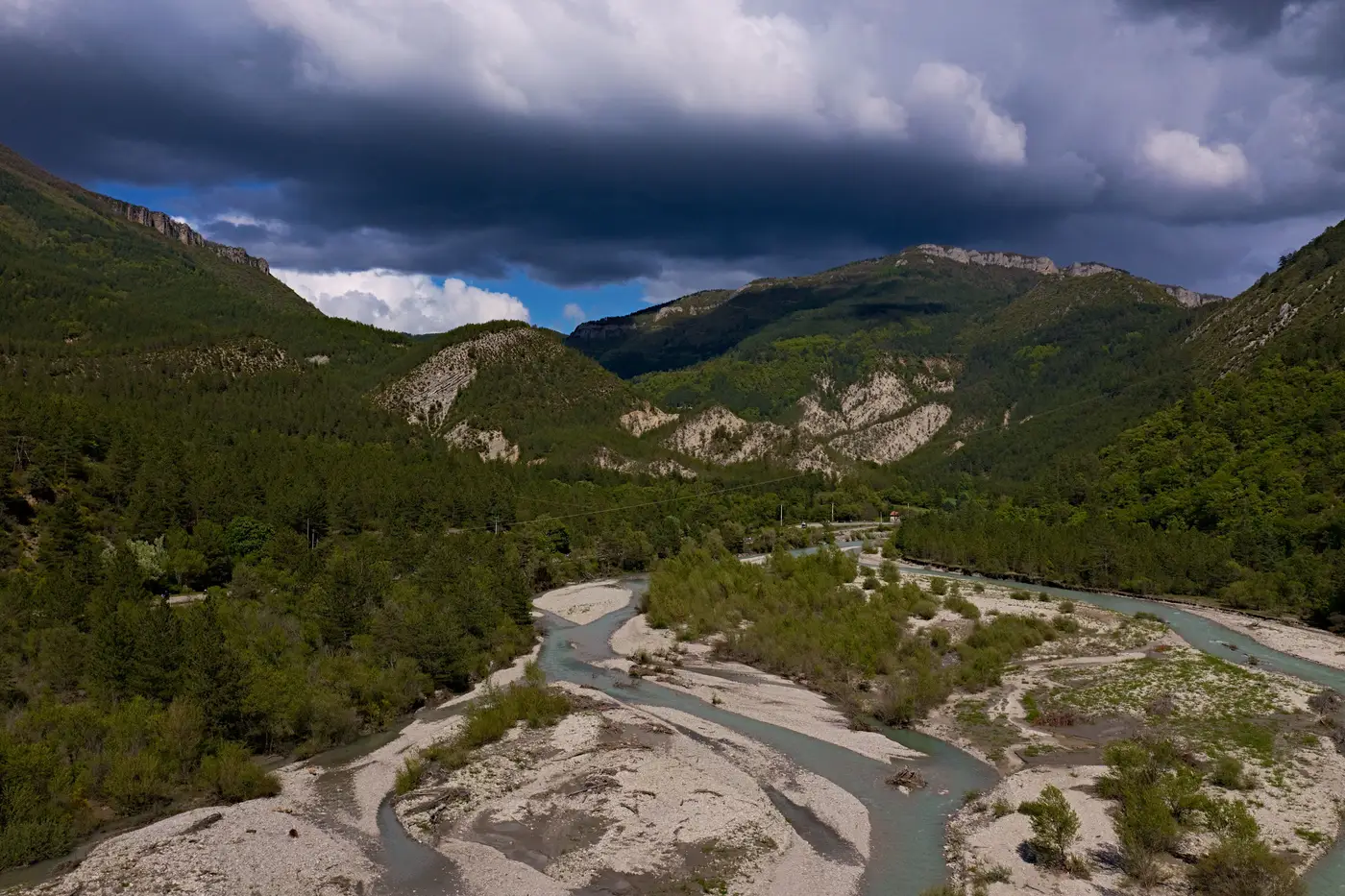
Every debrief has one frame like this. You're three hours into reviewing stills from a creek-bottom sector, eyes gone soft somewhere around frame 2,200, and there it is: a pale smear against gravel that could be a rock, a trash bag, a fold of tarp blown off a campsite upstream. Nobody stops on it the first pass. Nobody has time to.
That's the part people outside this work don't get. A single sortie over a few square kilometers of riverbank can hand back ten or twenty thousand frames. A coordinator sitting down to review them isn't looking for the obvious stuff, the open clearings and trail junctions jump out on their own. What eats the hours is everything that doesn't jump out. The frame where the thing you're looking for happens to be lying at the same angle as every shadow around it, same tone as the gravel, same size as a hundred other pale shapes the drone caught on its way down the grid line.
So the scroll wheel does the work instead. Frame, frame, frame. Your eye calibrates to the baseline of rocks and brush and gets faster at skipping past it, which is exactly the problem, because the calibration doesn't know the difference between a rock and a person who's stopped moving.
I've heard this story enough times from different coordinators that I've stopped thinking of it as a story and started thinking of it as a pattern. Somebody goes back through after the debrief, usually because a confirmed sighting from another sector gives them a reason to re-check similar terrain, and they find the frame they walked past at hour three. Zoomed in, cropped tight, it's not ambiguous anymore. It just wasn't legible at thumbnail size scrolling past at the pace a full sector review demands.
The people reviewing this imagery are good at it. What runs short is time: a sortie that takes forty minutes to fly can take the rest of the shift to review properly, and review quality drops the longer that review runs, because fatigue doesn't announce itself. You don't feel your attention narrowing. You just stop catching the marginal cases.
Reviewing fewer frames, the right ones, first, is what changes the math here. Once a sector has a confirmed hit, whether that's a sighting, a piece of gear, a footprint pattern on a gravel bar, you've got a reference point. The imagery itself can be sorted against that reference instead of scanned in flight order, which means a coordinator's attention goes to a short list of frames that resemble something confirmed, ranked and pinned to coordinates, rather than a folder in chronological order waiting for someone's eyes to hold up for the full pass. Search & Rescue Imagery builds that short list straight out of the flown sector's imagery, so the review starts with the frames most likely to matter instead of frame one.
None of this replaces the eyes on the frame. A ranked candidate list still needs a coordinator to look at it and make the call, same as it always has. What it changes is where that coordinator's limited, degrading attention gets spent first. The smear at frame 2,200 deserved a second look the first time through. Most of the time, the only thing standing between "deserved" and "got" is how many thousand frames stood in front of it.
If your last debrief had one of those frames, worth seeing what a ranked sector review looks like before the next one does.